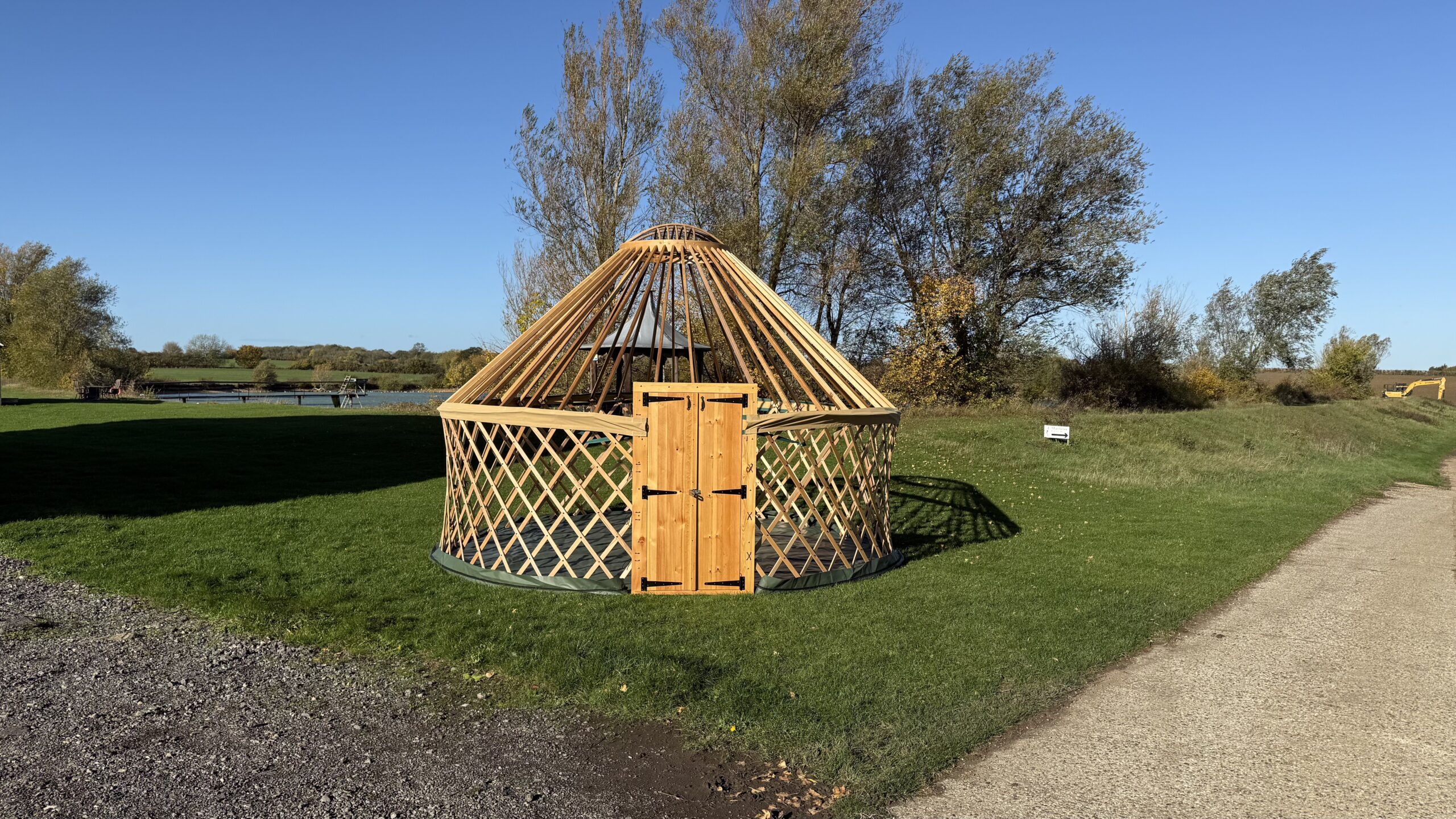
When we recently supplied a yurt to a school for use as an outdoor classroom, it really brought home how much more a yurt can offer than simply extra teaching space.
Of course, a yurt makes a beautiful and practical outdoor classroom. It creates a sheltered environment, helps schools make better use of their grounds, and gives children the novelty of learning somewhere that feels different from a standard classroom. But beyond that, a yurt is a teaching opportunity in its own right.
A yurt is not just a structure. It is a remarkable piece of design. Its circular form, tension-based construction, and efficient use of materials make it very different from the building methods most students in the UK are familiar with. In that sense, a yurt can become more than a place to teach lessons — it can become part of the lesson itself.
For schools looking to invest in spaces that support curiosity, creativity, and hands-on learning, a yurt offers something genuinely distinctive.
There is something powerful about stepping into a space that does not feel like a conventional classroom.
A yurt feels calm, enclosed, and separate from the noise of the main building, while still keeping pupils connected to the outdoors. That change of setting can make learning feel more memorable and more engaging. For some children, it can spark curiosity immediately. For others, it can create a calmer atmosphere that supports focus and discussion.
Outdoor learning has long been valued not only because it gets children outside, but because it shifts the rhythm of teaching. A yurt gives schools a way to capture that benefit while still having a structured, usable, weather-protected space.
One of the most exciting things about a yurt in a school setting is that it gives students direct contact with a form of engineering they are unlikely to encounter elsewhere.
Unlike most modern buildings in the UK, a yurt does not rely on rigid corners, brick walls, or the same load-bearing principles pupils see every day. Instead, it works through balance, compression, tension, circular geometry, and the efficient distribution of force. That makes it an excellent way to introduce big engineering ideas in a tangible, memorable way.
If students are able to watch a yurt being built — or even help with parts of the process — the learning opportunity becomes even stronger. They can see how individual parts work together, how the structure gains strength from its overall form, and how smart design can create stability without relying on the same methods used in conventional buildings.
That kind of experience can make geometry and engineering feel real in a way that textbooks alone rarely can.
A yurt also opens the door to cultural learning.
Yurts are strongly associated with the nomadic cultures of Central Asia, and related forms of these dwellings continue to be used there today. UNESCO recognises traditional yurt-making knowledge in Kazakhstan and Kyrgyzstan as intangible cultural heritage, reflecting the continuing cultural importance of these structures.
For schools, that means a yurt can support far more than outdoor learning. It can prompt conversations about how people live in different parts of the world, how architecture responds to lifestyle and environment, and how traditional knowledge can embody sophisticated engineering principles.
That matters because it helps pupils widen their understanding of what good design looks like. It shows that innovation is not limited to modern Western construction, and that traditional structures can be every bit as intelligent, effective, and carefully developed.
STEM stands for science, technology, engineering and mathematics, and a yurt creates opportunities in every one of those areas.
Because it is a real structure with real materials, real forces, and real design decisions, it naturally lends itself to practical investigation. Instead of learning these subjects in isolation, pupils can explore how they overlap.
A yurt is especially useful because it turns abstract concepts into something visible and physical. Students are not just being told about shape, stability, insulation, materials, or measurement — they are surrounded by those ideas.
From a science perspective, a yurt is full of teaching opportunities.
Students can explore the properties of materials by looking at timber, canvas, insulation, rope, and fastenings. They can examine why some materials are flexible, why others are rigid, and how different components work together to create shelter.
A yurt also makes it easier to teach forces in a practical way. Pupils can consider tension in the roof system, compression in the frame, and how the circular shape helps spread loads. Even at a basic level, this gives them a much clearer grasp of how structures stay standing.
There are environmental science links too. Teachers could use a yurt to discuss heat retention, ventilation, waterproofing, seasonal change, and how buildings respond to climate. Comparing a yurt with a conventional classroom could lead to valuable conversations about sustainability, energy use, and design efficiency.
Technology in schools is not just about computers. It is also about applied design, making, and solving practical problems.
A yurt can support this brilliantly. Pupils can think about how a portable dwelling is designed for assembly, transport, weather resistance, and repeated use. They can consider why certain components are shaped the way they are, why the structure is modular, and how traditional solutions solve real design challenges.
Schools could build projects around questions such as: how do you make a shelter strong but portable? How do you create a roof without flat spans? How do you make a space comfortable using simple materials?
These are exactly the kinds of questions that encourage design thinking.
This is where a yurt may be at its strongest educationally.
Engineering is often best understood when students can see a system working in front of them. A yurt provides that. It is a complete structure, but one whose principles are visible rather than hidden behind plasterboard and brickwork.
Students can study how the lattice wall works, how the roof poles interact with the central ring, and how the whole structure gains strength through form and connection. They can test ideas, build small models, and compare different structural approaches.
Hands-on engineering learning is widely valued because it helps pupils move beyond theory into designing, testing, and improving ideas. A yurt gives schools a ready-made example of that process in the real world.
For older students especially, it could become a case study in efficient construction, vernacular architecture, and structural problem-solving.
Maths becomes much more immediate when students are standing inside a structure built on geometric principles.
A yurt offers a natural way to explore circles, radius, diameter, circumference, angles, symmetry, proportion, and measurement. Teachers can use the space itself to demonstrate how geometry is applied in real design.
Instead of asking abstract questions on a worksheet, you can ask practical ones. How many roof poles are needed? What angle do they sit at? How does the diameter affect floor area? How do you calculate the circumference of the wall? How does changing one dimension alter the rest of the design?
That kind of applied maths can be especially powerful for pupils who engage better when they can see the purpose behind the numbers.
One of the biggest educational opportunities comes before the yurt is even in use.
If students are able to watch the yurt being erected, or take part in safe age-appropriate elements of the process, the structure immediately becomes more meaningful. They are no longer just sitting inside a yurt — they understand that it is made from parts, principles, and choices.
That experience can spark questions that lead in all directions: Why is it round? Why is it stable? Why are the poles arranged that way? Why has this design endured for so long?
Those are exactly the kinds of questions schools want children to ask.
A school yurt can be used for reading, group work, forest school-style sessions, interventions, pastoral support, storytelling, art, and enrichment. But one of its greatest strengths is that it does not stop at function.
It is a space that teaches by its very presence.
It invites curiosity. It introduces culture. It makes engineering visible. It gives maths a real-world setting. It creates opportunities for scientific observation and technological thinking. And perhaps most importantly, it offers pupils an experience that feels memorable.
In a time when schools are looking for learning environments that are flexible, inspiring, and cross-curricular, a yurt is much more than an outdoor classroom.
It is a structure that can expand what teaching looks like.
Schools should buy a yurt not only because it creates extra teaching space, but because it creates extra teaching possibility.
It is a classroom, a cultural starting point, a design case study, and a hands-on STEM resource all in one. For pupils, that means more than simply learning outdoors. It means learning inside a structure that can itself inspire questions, conversation, and discovery.