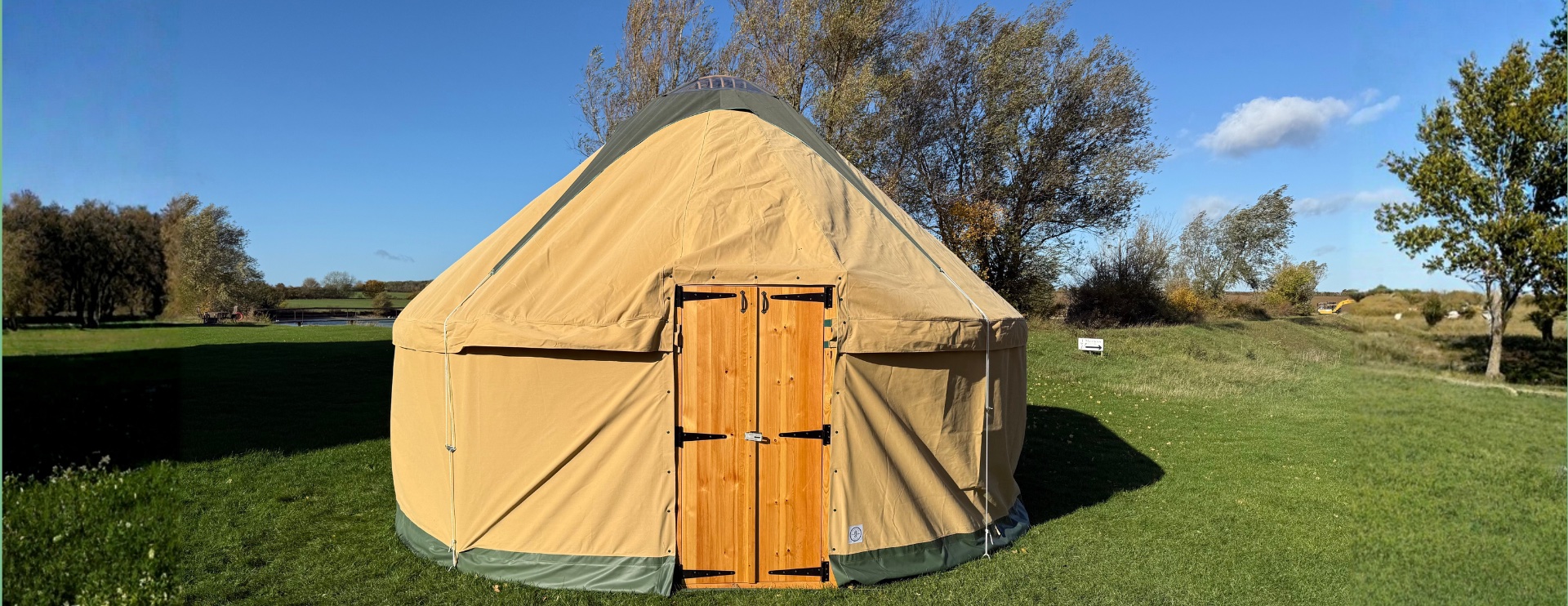
How Long Does a Yurt Last?
It’s one of the first questions people ask when they’re considering a yurt for a campsite, glamping business, or private use: how long will it actually last?
The honest answer is not a neat number. A yurt’s lifespan depends far less on the fact that it is a yurt, and far more on how it is used, where it is pitched, and how well it is maintained.
In UK conditions especially, the biggest dividing line is simple: is the yurt taken down, dried, and stored properly over winter, or is it left standing year-round? That one decision has a huge impact on how long the canvas and structure will stay in good condition.
For anyone buying a yurt — whether for a campsite or a private retreat — it is better to think of lifespan in terms of care cycles rather than a single headline figure.
The biggest factor in the UK: seasonal use versus year-round exposure
In the UK, yurts do not just face rain. They face prolonged damp, fluctuating temperatures, low winter light, mud, algae, debris, and long periods where fabrics can struggle to dry fully. That is why a yurt that is de-rigged for winter, cleaned, dried thoroughly, and stored away from the elements will usually outlast one that is left up continuously.
That does not mean a yurt cannot be left up for extended periods. Many are. But if it is, the maintenance standard needs to rise with the exposure.
Pitching conditions matter more than many buyers expect
Two yurts of the same age can weather very differently depending on where they are sited.
A yurt pitched in an open, well-ventilated area with decent airflow will have a very different life from one tucked under trees or positioned somewhere that stays damp and dirty. Trees may look idyllic, but they can be hard on canvas. Falling pollen, sap, seeds, and leaf debris settle into the fabric, while bird droppings and general grime cling even more readily when the canvas is damp. Left in place, that build-up does not just make the yurt look tired — it increases cleaning demands and can shorten the useful life of the cover.
Even away from trees, canvas still picks up airborne dust, pollen, and dirt, so outdoor exposure always comes with some level of upkeep.
Cleaning is not cosmetic — it is part of the lifespan
One of the easiest mistakes to make is treating canvas cleaning as an aesthetic extra. It is not. It is part of the maintenance that helps determine how long the cover lasts.
Canvas should be checked regularly and cleaned when needed, with spot cleaning for marks like bird droppings, mud, or localised grime before they become embedded. For a yurt in regular seasonal use, an annual clean is a sensible baseline. For a yurt in a dirt-prone location, under trees, or on a busy commercial site, it may need more frequent attention.
Re-waterproofing matters even when the canvas is not leaking
This is one of the most overlooked points by new owners.
A yurt does not need to be visibly leaking to need reproofing. Waterproofing treatments naturally diminish over time, which is why annual reproofing is such an important part of yurt care. It helps maintain weather resistance and also supports the long-term health of the canvas.
It is also worth remembering that reproofing is not just about rain. Many treatments add a degree of UV protection too, which matters because a yurt used from spring through to early autumn is still exposed to months of daylight. Even in the UK, that exposure gradually takes its toll on fabric.
For campsite owners, this is especially important because even a yurt that appears perfectly serviceable can age faster if cleaning and reproofing are postponed for several seasons.
The good news is that this maintenance is straightforward. Many owners do it themselves, and there are also specialist companies that will professionally clean and reproof tent canvas if you would rather send the cover away for treatment.
The wooden frame can last far longer than the canvas
The canvas is usually the part people worry about first, but the wooden frame deserves attention too.
With sensible maintenance — keeping it dry where possible, gently sanding when needed, and reapplying an oil finish such as linseed oil — the frame can last for a very long time. In theory, if the timber is looked after properly and the canvas remains waterproof, the frame could have an almost indefinite lifespan.
In practical terms, that means the frame and the canvas are on different timelines. The timber structure may continue performing beautifully for many years after one or more canvas covers have been replaced.
So how long will the canvas last?
The canvas is the consumable element. It will eventually need replacing.
But “eventually” can mean very different things depending on maintenance. A neglected cover left up in poor conditions will age far faster than one that is cleaned, dried, reproofed, and stored properly. With proper care, a canvas cover could last up to 10 years, but that should be seen as a well-maintained outcome rather than a guarantee.
The important point is not to promise a fixed number. It is to understand what helps a cover reach the upper end of its useful life.
If a yurt stays up through winter, heat helps
For yurts left standing through the colder months, moisture management becomes even more important.
In UK winter conditions, installing a woodburner and using it regularly can help the canvas dry out more effectively between damp spells, reducing the chance that the structure stays cold and wet for long periods. There is also a comfort point here: for year-round use in the UK, a heat source is not really a luxury. It is often necessary to make the space pleasant and usable in winter at all.
What buyers should really ask
If you are buying a yurt, the better question is not simply, “How long does it last?”
It is:
How will it be used, and how will it be looked after?
A well-made yurt that is cleaned annually, reproofed after cleaning, kept as dry as possible, and either stored correctly in winter or managed carefully when left up can have a long working life. A poorly maintained one in a dirty, shaded, damp location can look tired and fail early by comparison.
So the realistic answer is this:
A yurt can last very well, but its lifespan is earned through maintenance.
The wooden frame may last for decades.
The canvas will need replacing sooner.
And in the UK, good upkeep is not optional if you want the best from it.
In one sentence
For campsite owners and buyers alike, the lifespan of a yurt is less about a fixed number of years and more about whether the canvas is kept clean, dry, reproofed, protected from unnecessary dirt and damp, and whether the frame is maintained properly over time.